7 min readUpdated September 1, 2025
MOQ, pricing and lead times: what actually drives your unit cost
Buyers often ask for a price before describing the product. Here is what a factory is actually calculating, so you can shape the brief to land where your budget is.
Where the money goes in a plush toy
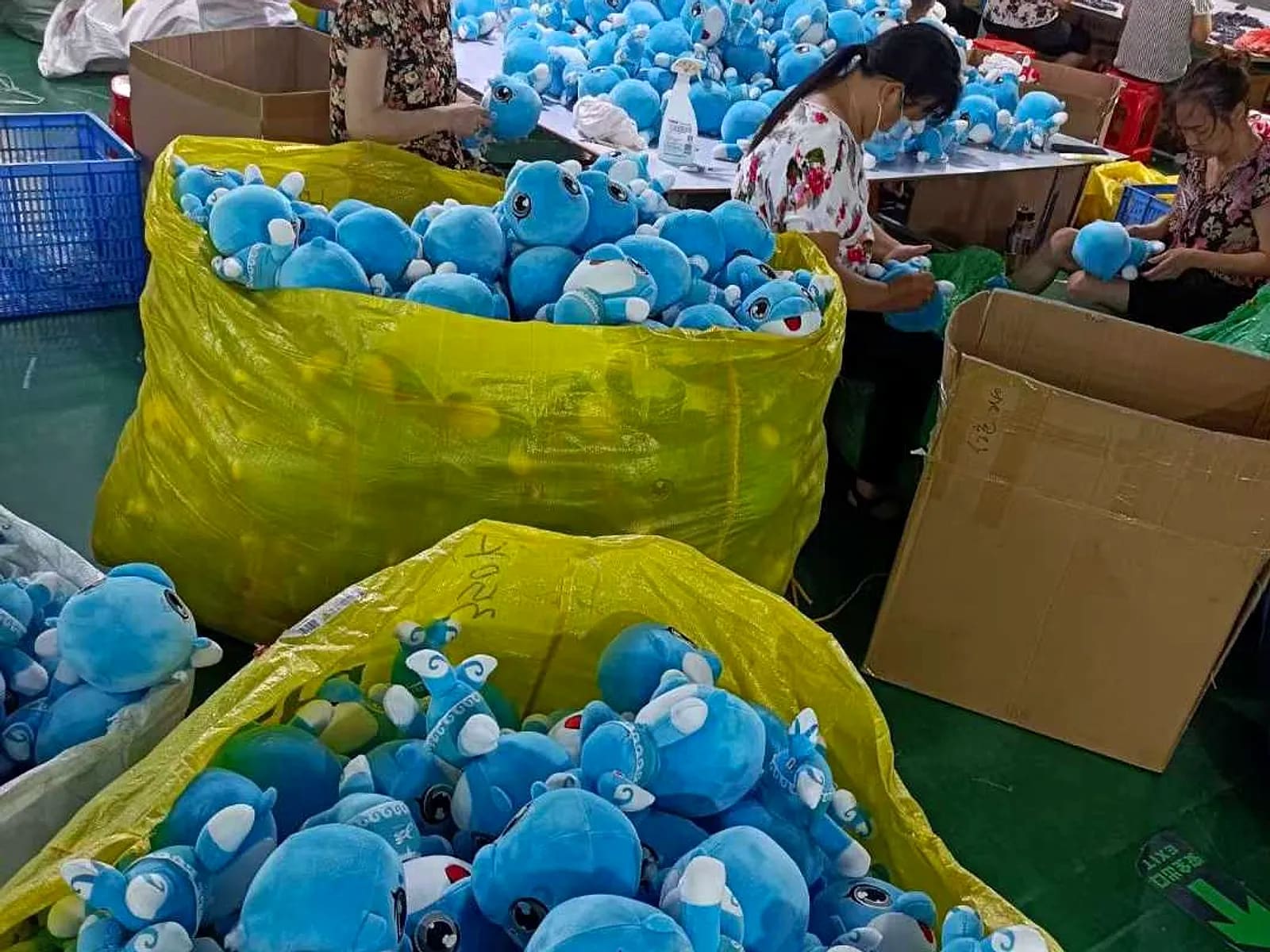
For a typical 25 cm plush at a few thousand pieces, cost splits roughly into materials at 30–40%, direct labour at 30–40%, packaging and labelling at 10–15%, and testing, overhead and margin across the rest. The proportions shift with size: on a 10 cm keyring, labour and packaging dominate because the material content is tiny.
This is why a keychain at half the size is rarely half the price. The number of operations barely falls.
Operation count is the real driver
Ask any factory to break out the operation count and the quotation becomes legible. A simple four-panel animal with embroidered eyes might be twelve operations. Add a separate muzzle, an appliqué belly patch, a removable jacket with a working zip and hand-set hair, and you are at fifty or sixty.
Each operation is a person, a machine and a few seconds. Removing three operations that nobody will notice — an unnecessary appliqué, a second colour of topstitching, a lining nobody sees — often saves more than switching to a cheaper fabric, and does not degrade the product.
How MOQs are really set
A minimum order quantity is not a policy, it is arithmetic. It is the point at which the setup — pattern grading, cutting dies, embroidery digitising, machine changeover, a dedicated line for a day — is amortised thinly enough that the unit price still makes sense.
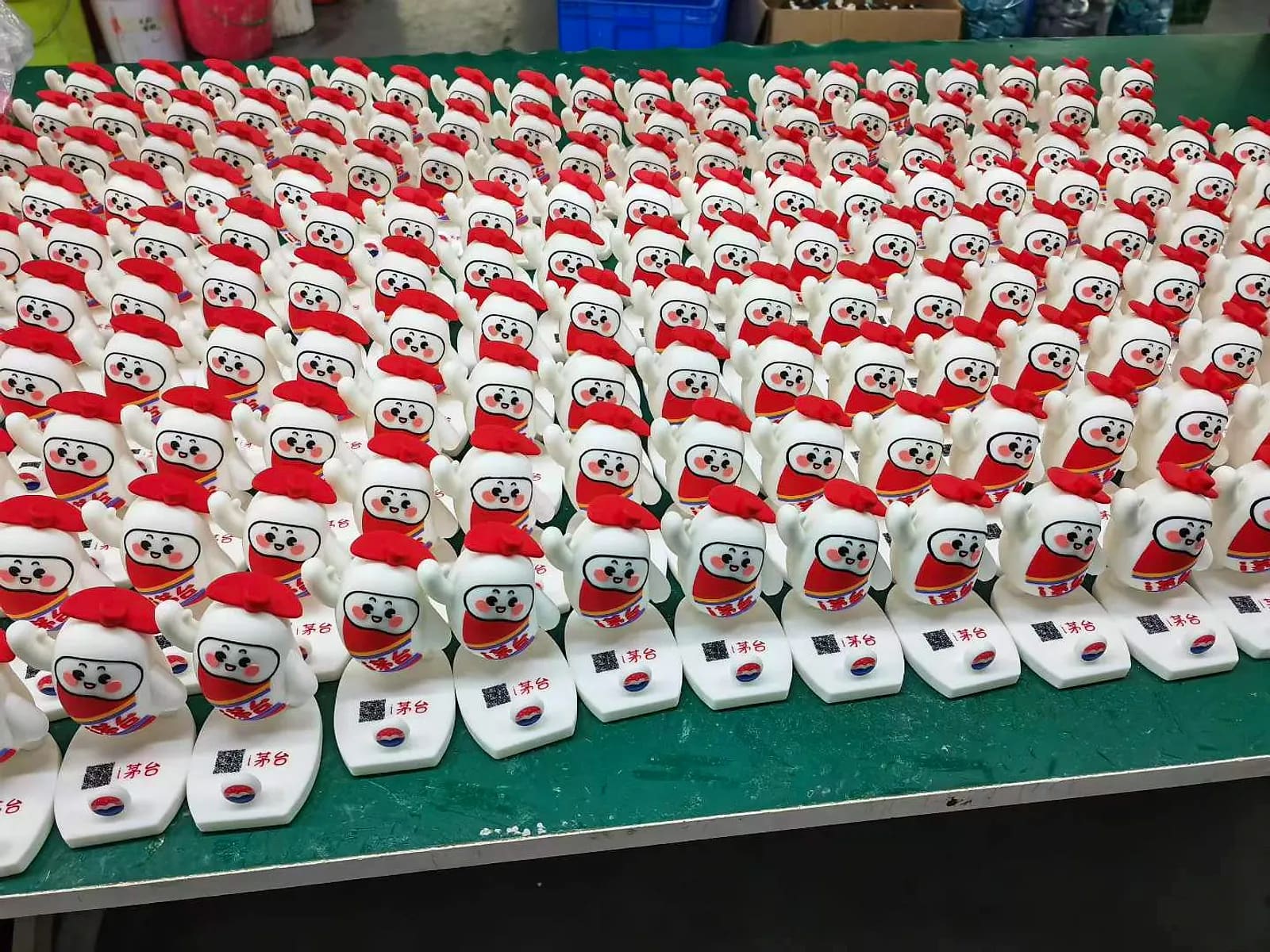
That is why MOQs differ by process. Plush sewing has low setup, so 300 pieces per design works. Soft PVC needs a steel mould cut for each part, so 1,000 pieces is typical. Polyresin uses silicone moulds that are cheap but wear out, so 300 works but the moulds are re-cut for large runs. Hand-cast display pieces have almost no setup and can run at 100.
One consequence worth knowing: colourways count as separate designs for MOQ purposes if they need separate fabric lots, but not if they share cut panels.
Where the price breaks are
The curve is steepest early. Moving from 300 to 1,000 pieces often takes 15–25% off the unit price because setup spreads. From 1,000 to 5,000 you might see another 10–15%. Beyond 10,000 the improvements come from material purchasing rather than labour, and are smaller.
Ask for a quotation at three quantities rather than one. It tells you where your own volume decision actually pays, and it costs the factory nothing to provide.
Lead times and what compresses them
A realistic plan is 7–10 working days for a sample, a week for your review, and 25–35 days for bulk after approval and deposit, plus 30–35 days sea freight to Europe or the US east coast. Working backwards from an in-market date, that is roughly four months.
What compresses it: approving artwork and packaging in parallel with sampling, choosing stocked fabrics rather than dyed-to-order colours, and paying the deposit promptly — production scheduling is on a first-deposit basis, not a first-email basis. What extends it: dyed-to-order colours, hand-set hair, hand painting, new PVC tooling, and Chinese New Year, which reliably removes two to three weeks of capacity every year.
Cost savings that do not damage the product
Reduce size by 10%. A 22 cm toy instead of 25 cm is barely noticeable on a shelf and takes real cost out of both materials and shipping volume.
Simplify the back. Customers see the front; a two-panel plain back instead of a printed one is invisible in use. Standardise packaging across a range so one box artwork covers four products. Consolidate colourways. And ship a fuller container — freight per unit falls sharply when you are not paying for air.
Costs buyers forget to budget
Third-party lab testing runs USD 400–1,200 per product depending on market and scope. Sample costs, though usually credited against bulk. Packaging artwork and printing plates. Barcode and label origination. Duty and, for DDP terms, customs clearance. Photography for your own listings, which is worth doing on the approved sample rather than waiting for bulk.
None of these are large individually. Together they are frequently 10% of a first order, and they are the ones that surprise new brands.
Published May 6, 2025 · Updated September 1, 2025 · Custom Plush Toy Factory